This content is provided for informational purposes only. Always comply with current safety regulations and consult a certified expert before implementing any protective measures.
Lightning protection priorities for facility managers
- Three primary damage mechanisms: direct thermal/structural impact, electromagnetic pulse disruption of electronics, and surge propagation through power networks
- BS EN 62305 compliance mandated for many UK industrial sites under HSE duty-of-care obligations and insurance policy conditions
- Risk assessment must precede protection design—facility characteristics (height, metal structures, hazardous contents) determine required protection level
- Annual inspection by certified specialists verifies system integrity—protection degrades through corrosion, mechanical damage, and site modifications
Why industrial facilities face heightened lightning strike exposure?
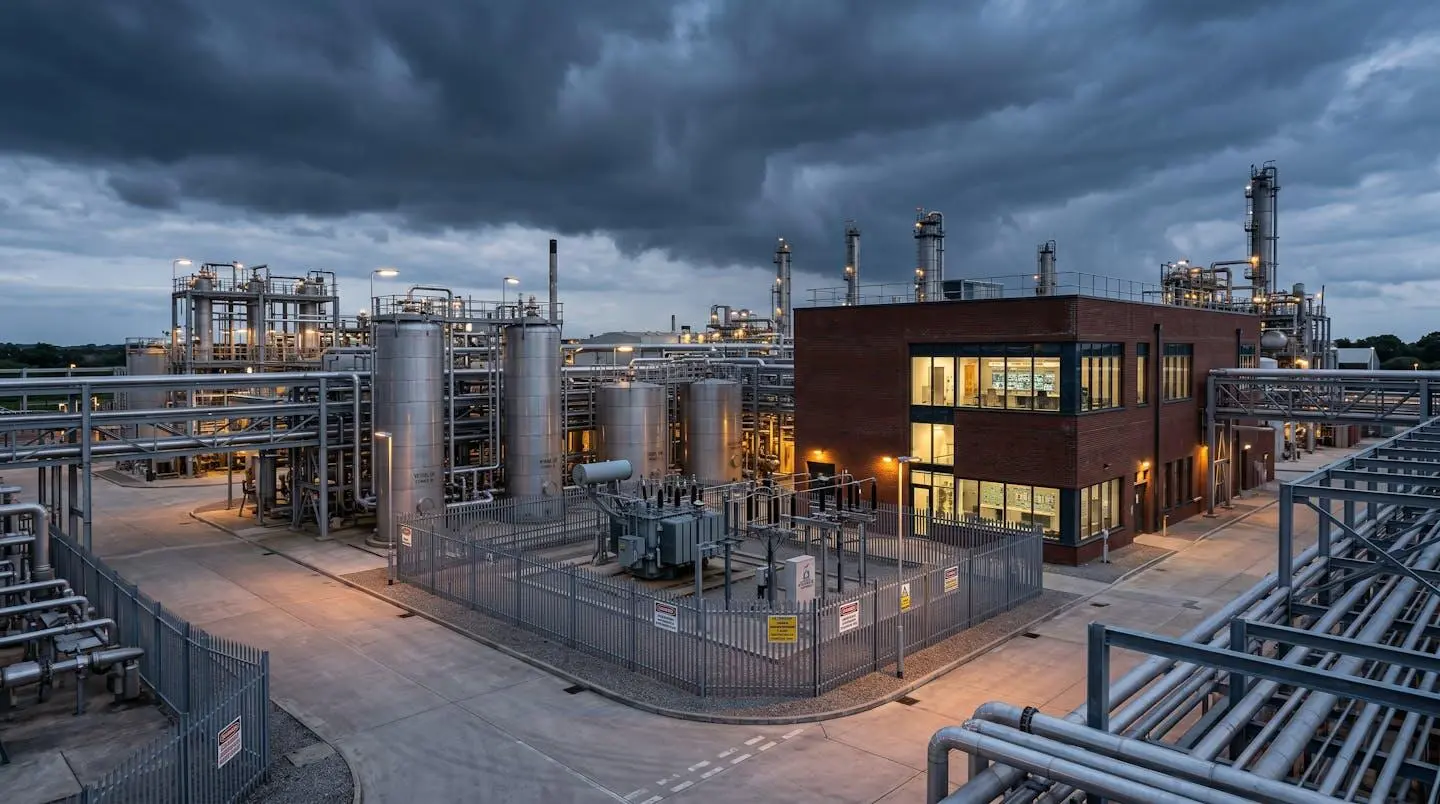
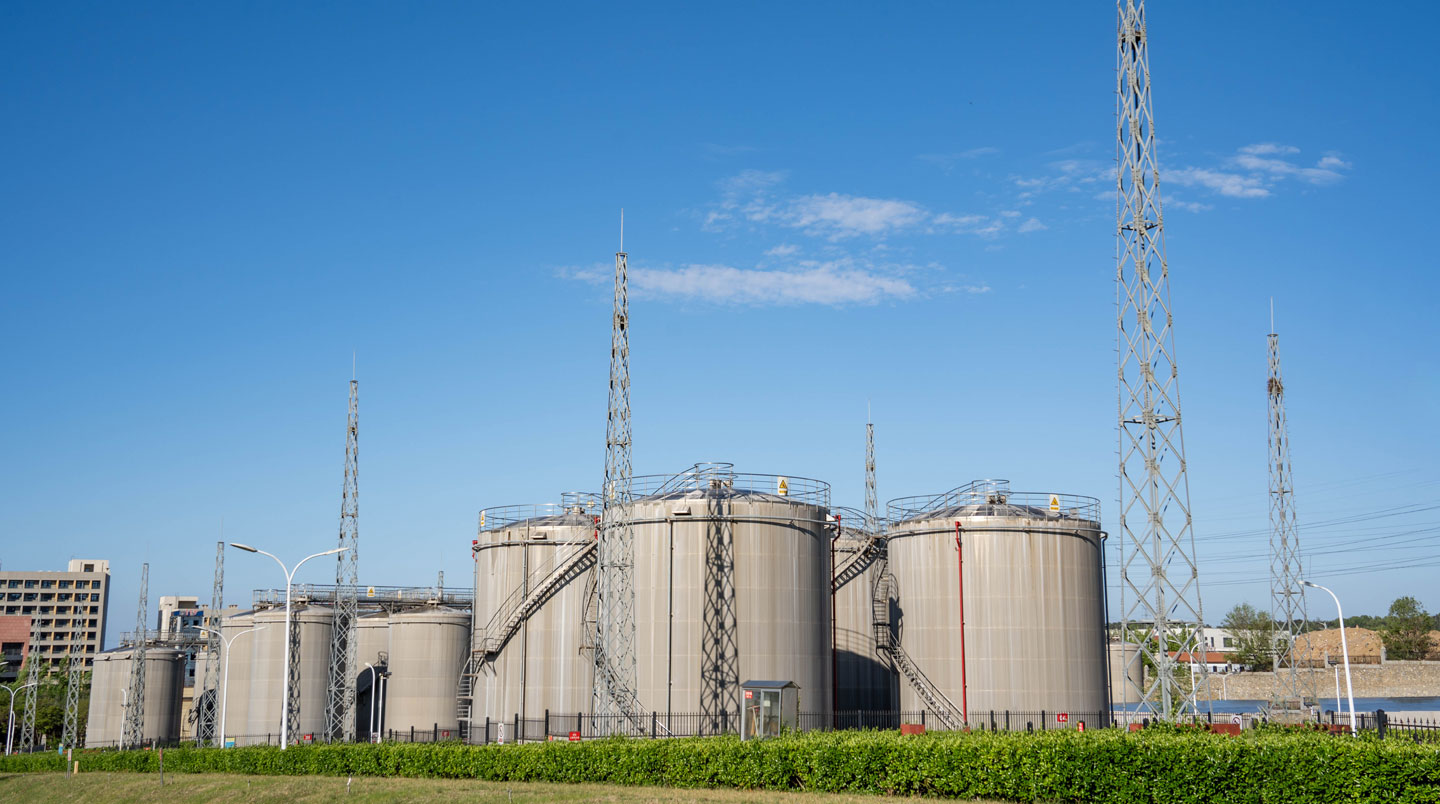
Lightning does not strike randomly. Physical characteristics determine vulnerability. Industrial sites concentrate multiple risk factors: vertical structures (silos, stacks, conveyors) extending above surrounding terrain, extensive outdoor metalwork (pipework, cable trays, tank farms), and electronic control infrastructure combining high replacement cost with operational criticality.
The chemistry and petrochemicals sectors face compounded exposure. Flammable or explosive atmospheres classified under ATEX regulations transform lightning from an equipment threat into a potential ignition source. As the IChemE Hazards 29 peer-reviewed analysis of lightning ignition risks confirms, lightning is formally defined as a source of ignition by HSE and British Standards—by definition posing a risk in ATEX installations where adequate industrial plant lightning protection becomes a legal obligation under DSEAR 2002 regulations, not merely a prudent precaution.
17,000
cloud-to-ground flashes
detected across the UK in 2024 by the European Lightning Detection Network, with exceptional September activity exceeding 6,000 strikes—the second-highest September total on record
Lightning density varies significantly across UK regions. The 2024 UK average of 0.0726 cloud-to-ground flashes per square kilometre masks localised concentrations during peak storm months. Facilities in high-exposure zones face strike probabilities orders of magnitude above national averages—a variable the BS EN 62305-2 risk assessment methodology explicitly accounts for when determining tolerable risk thresholds.
The spectrum of damage: from catastrophic failure to silent degradation
The visible aftermath of direct strikes—fire damage, shattered masonry, melted conductors—dominates incident reporting. Yet field data consistently identifies a more insidious threat: cumulative micro-damage to electronic systems that manifests weeks after atmospheric events, often attributed to unrelated causes until forensic investigation reveals electromagnetic interference as the root cause.
Direct strike consequences: structural and thermal damage
When lightning terminates on unprotected structures, peak currents reaching 200 kiloamperes (BS EN 62305 lightning parameter specifications) seek the lowest-impedance path to earth. Resistive heating along that path—through brick, concrete, or structural steel—vaporises moisture instantaneously. The resulting steam pressure fractures masonry and can explosively fragment building elements.
Electromagnetic pulse effects on control systems
Lightning channels generate intense electromagnetic fields that induce voltages in nearby conductors without requiring physical contact. Control system cabling, data networks, and instrumentation loops act as receiving antennas. Induced transients—lasting microseconds but reaching kilovolt amplitudes—exceed the breakdown thresholds of semiconductor components in PLCs, SCADA systems, and variable-speed drives.
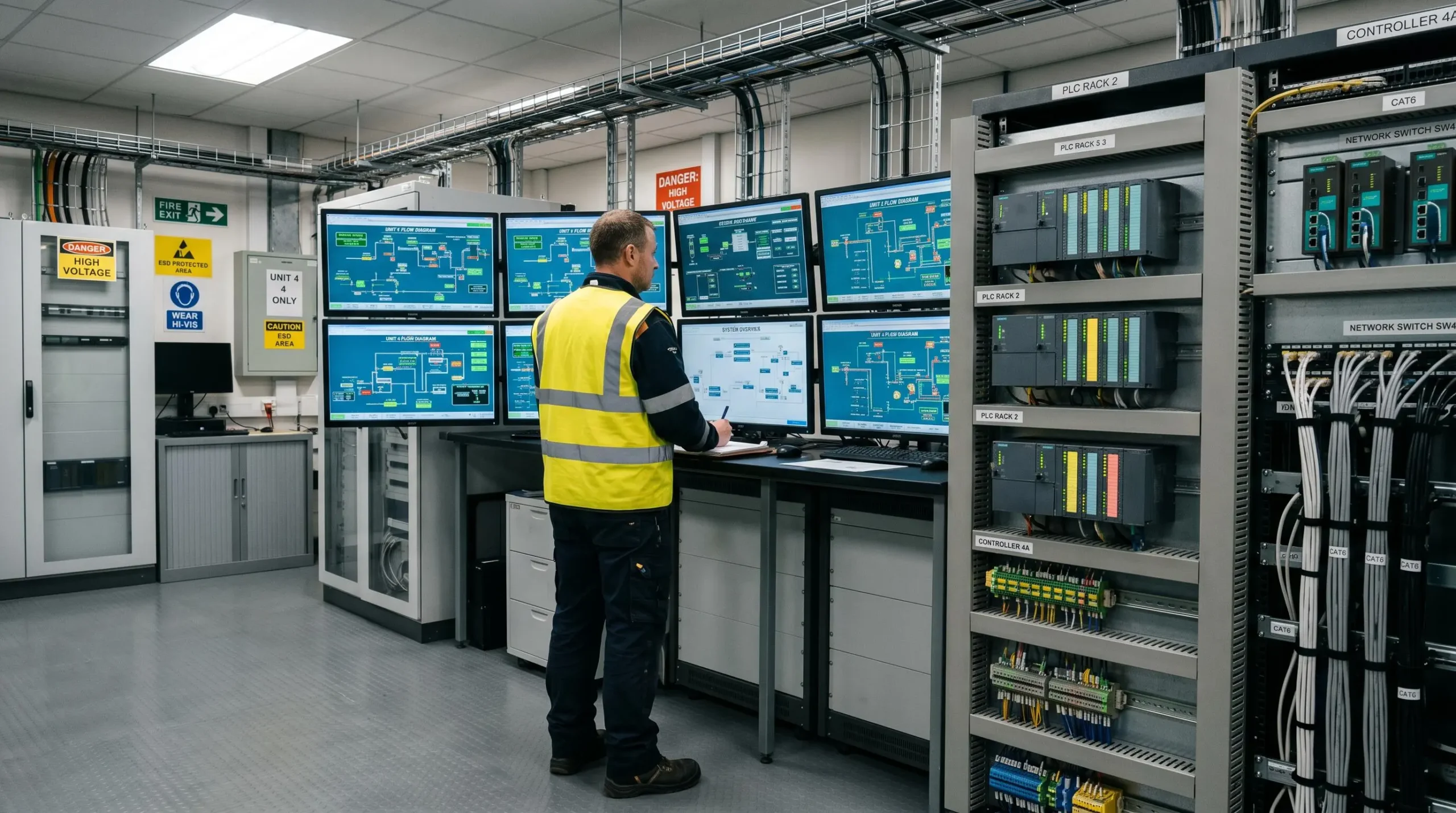
The most frequently overlooked aspect of protection design addresses this indirect coupling mechanism. Facilities invest in visible external protection—air termination rods, down conductors—while leaving control rooms and instrumentation cabinets unshielded. Modern sensor arrays and advanced instrumentation increase electronic density per process loop, amplifying electromagnetic vulnerability unless protection design evolves accordingly.
Power surge propagation through electrical networks
Lightning striking utility infrastructure kilometres from a facility injects transient overvoltages into distribution networks. These surges propagate along incoming power supplies, telecommunications lines, and even nominally isolated systems sharing common earth references. Standard circuit protection (MCBs, fuses) responds too slowly—they protect against sustained overloads, not microsecond transients.
A Midlands pharmaceutical facility illustrates the hidden electromagnetic threat. In August 2023, lightning struck utility infrastructure 400 metres away, with no visible damage to the plant itself. Yet within 72 hours, three PLCs controlling sterile filtration loops failed diagnostics, batch data became corrupted across two production lines, and SCADA historians logged voltage anomalies precisely aligned with the storm timestamp. Forensic investigation traced the failures to electromagnetic pulse coupling through unshielded instrumentation cables running between buildings. The facility had external air termination rods (LPL III) but no coordinated internal protection—no SPD cascades, no cable shielding, and no equipotential bonding between process islands.
Following a BS EN 62305-2 risk assessment, the site implemented Type 1–2–3 cascaded SPD protection at the service entrance and subdistribution boards, shielded all inter-building signal cables, and introduced six-monthly earth resistance verification. When September 2023 storms delivered three strikes within 2 km, no electronic disruption occurred—the layered protection performed as designed.
| Damage Scenario | Immediate Effects | Insurance Claim Complexity | Inspection Requirements |
|---|---|---|---|
| Direct strike to structure | Fire, structural fracture, visible melting of conductors, personnel shock risk | Low—visible damage provides clear causation evidence | Structural survey, electrical continuity testing, infrared thermography |
| Nearby strike with electromagnetic pulse | Electronic system resets, data corruption, nuisance tripping of protection relays | High—requires forensic analysis to link delayed failures to electromagnetic event | Comprehensive electronic systems testing, insulation resistance verification, event log analysis |
| Power surge via mains supply | Equipment trips offline, power supply failures, loss of communication networks | Medium—utility records may confirm external event, but apportioning responsibility contested | Surge counter readings, SPD status verification, utility coordination |
Assessing your facility’s actual risk profile
BS EN 62305-2 provides a quantitative risk assessment methodology mandated before protection system design. The calculation determines whether tolerable risk thresholds are exceeded—accounting for lightning density at the site location, structure dimensions and construction, contents value and type, occupancy patterns, and consequence severity (injury to personnel, service interruption, cultural heritage loss).
Facilities managers requiring rapid self-assessment can apply a simplified triage approach. The checklist below identifies variables that, when present in combination, typically drive risk calculations above tolerable thresholds—triggering a requirement for professional BS EN 62305-2 analysis within defined timescales.
- Building height exceeds 12 metres or structure extends significantly above surrounding terrain
- Extensive outdoor metal structures (pipework, conveyors, cable trays, storage vessels) interconnected with building services
- Flammable, explosive, or hazardous materials present requiring ATEX or DSEAR compliance
- Process-critical electronic control systems (SCADA, DCS, PLCs) where failure causes production halt or safety system degradation
- Previous lightning-related incidents documented at the site or nearby facilities of similar construction
- Location in region experiencing frequent thunderstorm activity during operational seasons
- Insurance policy conditions explicitly require lightning protection certification or maintenance records
- Public access areas or high-occupancy zones within facility perimeter
Best-practice risk assessment methodologies prioritise professional evaluation when three or more factors apply. The calculation considers interaction effects—for instance, a moderately tall structure containing explosive atmospheres presents exponentially higher risk than either factor in isolation. Self-assessment provides triage only; it cannot substitute for the quantitative BS EN 62305-2 analysis that protection system designers require as their specification baseline.
This HSE operational guidance on hazardous site lightning protection sets out the expectation that major hazard installations apply recognised engineered measures aligned with the BS EN 62305 series—HSE Specialist Inspectors verify compliance during interventions, classifying lightning strikes as potential initiating events for major accidents.
Industrial plant lightning protection: designing effective defences
Effective protection operates as a layered system, each component addressing distinct damage mechanisms. External protection intercepts strikes and provides controlled current paths. Internal protection limits electromagnetic coupling and surge propagation. Earthing systems dissipate energy safely. Critically, these elements must function as an integrated whole—specifying air termination rods without coordinated surge protection leaves electronic systems exposed to the induced transients that external systems cannot prevent.
External protection systems: air termination and down conductors
Air termination—commonly Franklin rods, mesh conductors, or catenary wires—provides preferential strike points. BS EN 62305 defines four protection levels (LPL I through IV) determining positioning and density of these elements using the rolling sphere method to calculate protected zones.
Down conductors provide the low-impedance path from air termination to earth. Multiple parallel paths reduce current density and minimise magnetic field generation. Conductor routing must avoid sharp bends—lightning current can flash across corners due to inductive voltage rise.
Internal protection: surge protection devices and bonding
Surge protective devices (SPDs) limit transient voltages entering via power supplies, telecommunications, and instrumentation circuits. BS EN 62305-4 classifies SPDs into three types deployed in coordinated cascades from service entrance (Type 1, highest energy) through distribution boards (Type 2) to equipment terminals (Type 3, fine protection).
Equipotential bonding connects all conductive building elements, services, and equipment enclosures to eliminate voltage differences during strikes. Without bonding, current flowing through the earth termination system creates ground potential rise—earthed equipment some distance away sits at a different voltage, causing destructive arcing across the potential difference.
Earthing systems: the foundation of effective protection
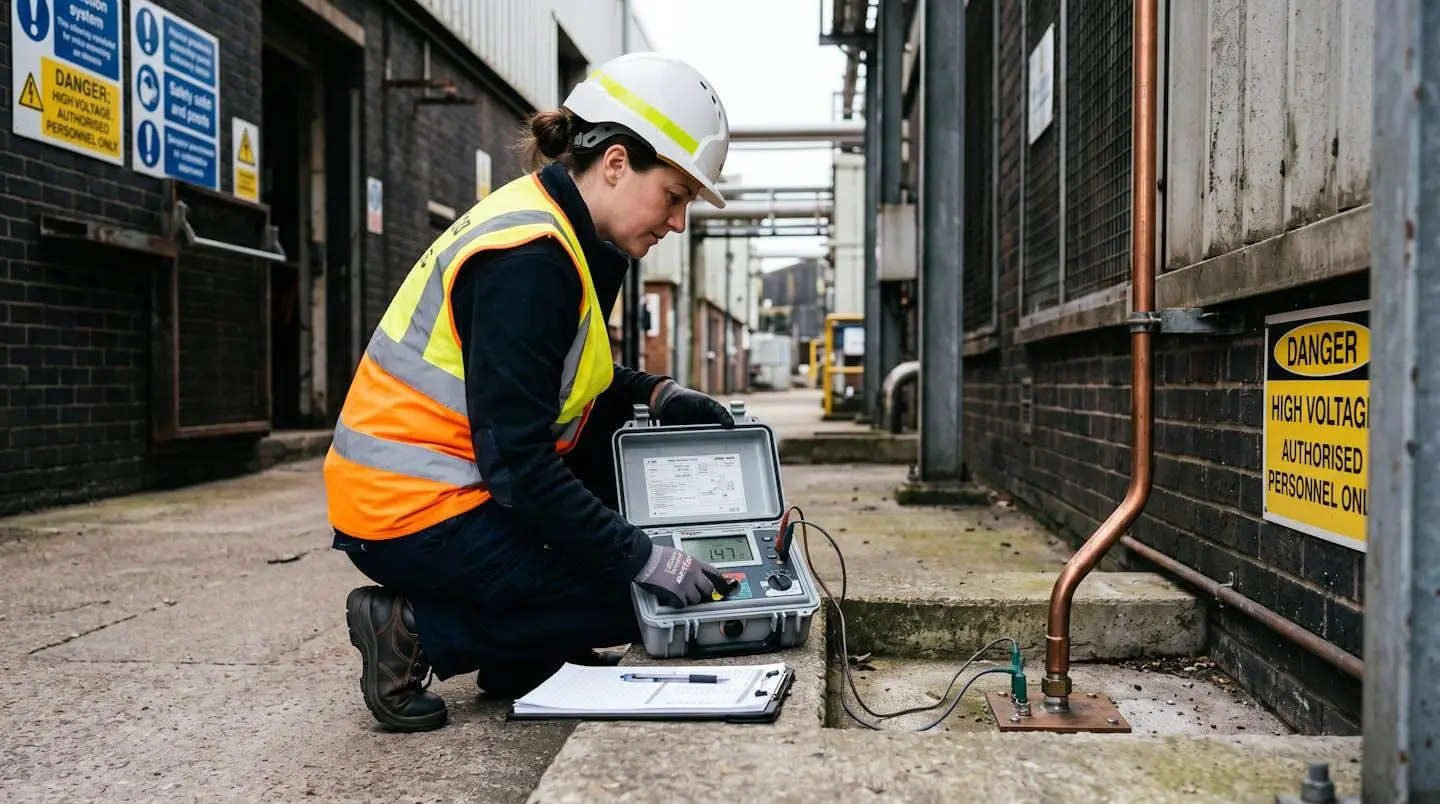
Earth termination networks dissipate lightning current into the ground mass. Low earth resistance—typically below 10 ohms for protection systems—ensures rapid voltage collapse after current injection. Ring earthing around structure perimeters provides the most effective arrangement, supplemented by vertical rods or horizontal radial electrodes. The earthing system serves multiple functions: lightning protection, electrical safety under fault conditions, and electromagnetic compatibility—all requiring careful integration during design.
Maintaining protection effectiveness: inspection, testing, and operational integration
Protection systems degrade. Mechanical damage, corrosion, and site modifications introduce failure modes that inspection programmes must detect before thunderstorm exposure tests them under live conditions. BS EN 62305-3 maintenance requirements mandate periodic verification—typically annual inspections for standard-risk sites, with more frequent intervals for high-consequence facilities or installations in aggressive environments.
Inspection verifies physical integrity (secure fixings, intact conductors, absence of corrosion), electrical continuity (all current paths maintain low resistance), and earth electrode performance (resistance remains below design thresholds). UKAS-accredited inspection bodies provide independent verification—increasingly, insurance policies specify accredited certification as a coverage condition.
Surge protective devices require particular attention. Unlike passive protection components, SPDs have finite lifespans—they degrade with each surge event. Replacement following manufacturer-specified service intervals or documented surge events prevents the false security of visibly intact but functionally exhausted devices. Operational procedures complete the protection strategy: staff training on storm protocols, real-time maintenance scheduling systems integrating lightning detection data, and condition-based inspection after electrical stress events.
How often do lightning protection systems require inspection?
BS EN 62305-3 recommends visual inspection annually for standard installations, with comprehensive testing (earth resistance, continuity verification) at intervals determined by site risk classification—typically 12 to 24 months. High-consequence facilities (COMAH sites, public assembly areas) often require more frequent verification. Insurance policies may mandate specific inspection frequencies as policy conditions.
Will insurance cover lightning damage if maintenance records are incomplete?
Increasingly, commercial property policies include conditions requiring documented maintenance of lightning protection systems where installed. Failure to provide inspection certificates from competent persons may result in claim disputes or coverage limitations. Specialist risk engineers from insurers verify compliance during site surveys—inadequate maintenance can affect premium calculations even before claims arise.
Can facility maintenance teams inspect protection systems, or must certified specialists conduct testing?
Visual inspections (checking for visible damage, corrosion, loose fixings) can be conducted by trained in-house personnel following documented procedures. However, comprehensive testing—particularly earth resistance measurements and continuity verification—requires specialist test equipment and interpretation by competent persons. UKAS-accredited inspection bodies provide independent certification that insurance policies and regulatory compliance often require.
What obligations apply if a protection system fails during its warranty period?
Installation warranties typically cover component defects and workmanship errors, but exclude damage from external events (including the lightning strikes the system is designed to withstand). Warranties usually require documented maintenance—systems neglected during warranty periods may void coverage. The critical distinction: warranties cover the protection system itself, not consequential damage to protected equipment if the system performs within its design limits but those limits prove inadequate for the actual strike severity encountered.
Do surge protective devices need replacement even if the facility has experienced no lightning strikes?
SPD degradation occurs from cumulative stress—not only direct lightning surges but also switching transients, utility network disturbances, and normal voltage variations. Manufacturers specify maximum service lives (commonly 10-15 years) beyond which replacement is recommended regardless of visual condition. Devices with status indicators or remote monitoring simplify condition assessment, but devices lacking these features require proactive replacement according to service interval specifications.
This article provides general guidance only and cannot account for site-specific variables (soil resistivity, local lightning density, structural characteristics, electronic sensitivity levels). Lightning protection design requires professional risk assessment conforming to BS EN 62305 standards—generic recommendations may be inadequate for individual facilities.
Regulatory requirements and insurance policy conditions vary—verify current obligations with insurers and local authorities. Protection system effectiveness depends on correct installation, regular inspection, and maintenance—systems degrade over time if neglected.
Specific risks to acknowledge: Inadequate protection may void insurance coverage in the event of lightning-related claims. Non-compliance with BS EN 62305 or HSE guidance may result in legal liability if incidents occur. Self-installed or incorrectly specified systems can create additional hazards (improper grounding, voltage gradients, side flash risks).
Consult a certified lightning protection specialist (conforming to BS EN 62305), accredited inspection body (UKAS-accredited), or specialist risk engineer from your insurer before implementing protective measures or making coverage decisions.