When electrical systems control production lines processing millions in inventory, protect personnel from arc flash hazards, or maintain pharmaceutical cold chains, enclosure failure isn’t just inconvenient—it’s catastrophic. Yet most specification processes treat enclosures as passive containers rather than active protection systems whose failure modes directly translate to business continuity risks.
The gap between generic compliance checklists and real-world protection requirements creates vulnerability. Standard approaches recommend NEMA 4X or IP66 ratings without analyzing whether those classifications actually address your specific environmental threats. They specify ambient temperature ranges without modeling how heat loads will evolve as systems expand. This disconnect between specification and operational reality is where failures originate.
Effective specification starts not with ratings tables but with documented failure scenarios. By reverse-engineering protection requirements from actual environmental threats, thermal evolution patterns, and emergency access scenarios, engineers can create verifiable specifications that withstand real-world conditions. Companies like Keystone Metal Craft have built their reputations on understanding these critical application-specific requirements that generic specifications miss.
Mission-Critical Enclosure Specifications in 5 Key Points
This article presents a failure-mode-backward methodology for electrical enclosure specification that addresses the verification gap in traditional approaches. You’ll learn how to map environmental threats to protection levels beyond generic ratings, calculate thermal headroom for system evolution, specify materials based on galvanic compatibility analysis, define emergency access requirements under worst-case conditions, and establish audit trails that prove compliance. The approach connects technical specifications directly to business continuity outcomes rather than treating compliance as a checkbox exercise.
Environmental Protection Rated for Your Actual Failure Scenarios
Generic environmental ratings provide baseline protection levels, but they operate under controlled test conditions that rarely match operational reality. A NEMA 4X enclosure withstands water spray from specific angles at defined pressures—yet your application may face simultaneous exposure to chemical vapors, thermal cycling, and vibration that no single rating addresses.
The failure-mode backward analysis methodology starts by documenting your complete environmental threat profile. Chemical facilities must catalog not just the presence of corrosive agents but their concentration patterns, exposure duration cycles, and interaction effects. Coastal installations face salt-laden moisture, but the critical specification factor is often the rate of wet-dry cycling that accelerates corrosion beyond what continuous exposure produces.
Standard testing protocols provide important baselines. Enclosures rated for harsh environments undergo 1,200 hours according to 2024 testing standards for moist carbon dioxide exposure, establishing corrosion resistance under controlled conditions. However, these single-factor tests don’t capture combined exposures that characterize many industrial environments.
| NEMA Rating | Protection Level | IP Equivalent | Key Applications |
|---|---|---|---|
| NEMA 4X | Corrosion-resistant, water-tight | IP66 | Chemical plants, coastal areas |
| NEMA 6P | Prolonged submersible | IP68 | Flood-prone installations |
| NEMA 12 | Indoor dust-tight | IP54 | Manufacturing facilities |
Rating inadequacy scenarios emerge when environmental factors combine or occur sequentially. An enclosure that passes IP54 dust ingress testing may fail when dust exposure alternates with condensation cycles that cement particulate into gasket interfaces. Temperature extremes that cause expansion and contraction can compromise seals that remain intact under static conditions.
Manufacturing Plant Dust Ingress Analysis Shows Critical Rating Gap
Analysis of industrial manufacturing facilities reveals that standard IP54 ratings may be insufficient when combined environmental exposures occur simultaneously. Plants experiencing both high dust levels and temperature cycling require upgraded protection levels beyond single-rating specifications.
Site-specific environmental profiling must extend beyond normal operating conditions to capture process upset scenarios and seasonal variations. Summer humidity combined with process heat creates internal condensation risks absent during winter operation. Maintenance activities that temporarily compromise containment systems may introduce contamination vectors that normal operation never encounters. Effective specifications document these edge cases and specify protection levels adequate for worst-case combinations, not just average conditions.
Thermal Management Specifications That Account for Heat Load Evolution
Mission-critical systems rarely remain static. Control systems get upgraded with more powerful processors. Monitoring equipment gets added. Communication networks intensify. Each addition contributes to internal heat loads that weren’t present when the enclosure was initially specified. An enclosure that maintains acceptable temperatures on Day 1 can experience thermal failures within months as the system evolves.
Heat load growth modeling requires projecting not just planned expansions but likely future additions. Industrial control systems that begin with basic PLCs often migrate to more sophisticated platforms with higher power consumption. Safety systems add redundant components. Remote monitoring adds cellular modems and edge computing devices. Specification must anticipate this evolution and provide thermal headroom beyond initial requirements.
| Enclosure Size (inches) | Heat Load (Watts) | Temperature Rise (°F) | Cooling Method Required |
|---|---|---|---|
| 48x36x16 | 300W | 25°F | Natural convection |
| 48x36x16 | 500W | 45°F | Forced ventilation |
| 60x48x20 | 1000W | 35°F | Air conditioning required |
Thermal specification verification protocols must validate actual performance under maximum anticipated load scenarios, not just nameplate ratings. This requires heat load calculations that account for simultaneous operation of all installed components at maximum duty cycles, ambient temperature extremes, and solar loading for outdoor installations. The verification process should include thermal imaging during commissioning to identify hot spots that theoretical calculations miss.

Failure threshold documentation moves beyond generic component temperature ratings to identify specific failure modes tied to thermal stress. Electronic components may have maximum operating temperatures of 185°F, but their mean time between failures degrades significantly above 160°F. Solid-state relays can handle brief temperature spikes that would cause premature failure if sustained. Effective thermal specifications define limits based on component longevity and failure probability, not just absolute maximums.
Cooling system redundancy becomes non-negotiable for applications where single-point thermal failures are unacceptable. Pharmaceutical storage, data centers, and continuous process control require backup cooling capacity that activates automatically when primary systems fail. Specifications must address not just steady-state thermal management but transient response during cooling system switchovers and degraded-mode operation during maintenance.
Material Selection Driven by Galvanic Compatibility and Site Chemistry
Material specifications typically focus on enclosure body construction—stainless steel for corrosive environments, aluminum for weight reduction, carbon steel with protective coatings for cost optimization. Yet enclosure systems comprise dozens of components: mounting hardware, conduit fittings, grounding conductors, internal rails, cable glands, and hinge assemblies. Failure to ensure galvanic compatibility across all these interfaces creates corrosion pathways that compromise even premium enclosure materials.
The galvanic series ranks metals by their electrical potential in seawater. When dissimilar metals contact in the presence of an electrolyte, the more anodic material corrodes preferentially. A stainless steel enclosure with carbon steel mounting bolts experiences accelerated bolt corrosion in humid environments. Aluminum enclosures with brass cable glands develop galvanic cells that degrade the aluminum at contact points. These interface failures often progress hidden from view until structural integrity is compromised.
Galvanic series analysis for complete system compatibility must catalog every metallic component and verify compatible positions within the series. When dissimilar metals are unavoidable, proper isolation using non-conductive gaskets, coatings, or washers breaks the galvanic circuit. Marine-grade specifications often require that all fasteners and fittings match the base material or use isolated attachment methods that prevent galvanic contact.
Site atmospheric chemistry profiling identifies specific corrosive agents beyond generic categories. Industrial facilities may have chloride exposure from cooling towers, sulfur compounds from combustion processes, or chemical vapors from production equipment. Agricultural settings introduce ammonia and organic acids. Each corrosive agent attacks specific alloys through distinct mechanisms—chlorides initiate pitting corrosion in stainless steel, sulfur compounds tarnish copper alloys, and ammonia attacks brass fittings.
Material specification integration ensures all system components share compatible galvanic positions or include proper isolation. This extends to seemingly minor elements like label plates, identification tags, and decorative trim. Accelerated corrosion testing specifications should replicate site-specific chemical exposures rather than relying solely on generic salt spray tests that may not trigger the actual failure mechanisms present in your environment.
The intersection of material science and operational requirements becomes particularly critical when selecting factory automation solutions that integrate enclosures with control systems, where material compatibility affects both mechanical integrity and electromagnetic interference characteristics.
Access and Serviceability Under Your Worst-Case Operational Conditions
Accessibility specifications typically reference code requirements for working space and maintenance clearances under ideal conditions. Yet mission-critical systems most need intervention precisely when conditions are worst—during process upsets, equipment failures, emergency shutdowns, and safety incidents. An enclosure perfectly accessible under normal conditions becomes a liability when technicians must work in full personal protective equipment, degraded lighting, or time-critical emergency scenarios.
Emergency access scenario modeling defines time-to-access requirements for critical failure modes. A motor control center protecting a refrigeration system for pharmaceutical storage must allow component replacement within the temperature excursion window before product loss occurs. Control systems for safety interlocks require access times compatible with emergency shutdown procedures. These timing requirements drive hardware specifications—quarter-turn latches instead of threaded fasteners, hinged doors instead of removable panels, tool-free access to components requiring frequent service.
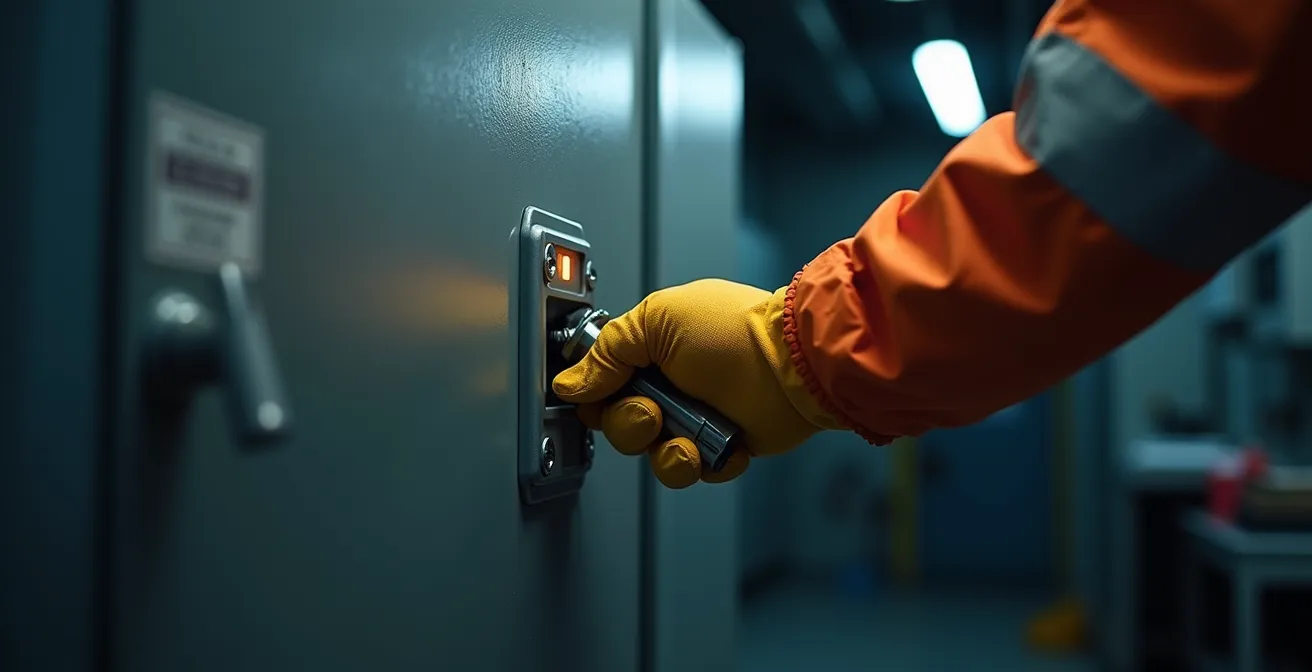
PPE-compatible design specifications account for arc flash suits, breathing apparatus, insulated gloves, and face shields that limit dexterity and visibility. Hardware that operates easily with bare hands becomes challenging with 40 cal/cm² arc flash gloves. Latches requiring fine motor control are incompatible with respirator face pieces that restrict downward vision. Specifications must define operation with the actual PPE required for the hazard classification of the installation.
Degraded condition access testing validates serviceability when multiple systems fail simultaneously. An outdoor enclosure that provides adequate access in daylight may be problematic during nighttime emergencies when site lighting has failed and technicians work by headlamp. Extreme weather conditions—high winds, driving rain, temperature extremes—that trigger equipment failures also complicate the access required for repairs. Verification testing should simulate these combined stressors rather than evaluating accessibility under benign conditions.
Tool-free or reduced-tooling specifications for time-critical interventions eliminate dependency on specific tools that may not be immediately available during emergencies. Quick-release mechanisms, captive fasteners, and tool-free terminal blocks reduce the equipment technicians must carry and the time required for access. This becomes particularly important for distributed installations where tools may need to be staged at multiple locations or for offshore and remote sites where tool availability is uncertain.
Key Takeaways
- Specify environmental protection by documenting actual failure scenarios and combined exposures rather than relying on generic ratings alone
- Build thermal headroom into specifications by modeling heat load growth and system evolution over the entire asset lifecycle
- Ensure galvanic compatibility across all metallic components and specify materials based on site-specific atmospheric chemistry analysis
- Define access requirements for worst-case emergency scenarios including PPE restrictions and degraded environmental conditions
- Establish verifiable specifications with factory acceptance tests, documentation requirements, and ongoing compliance audit protocols
Verification and Audit Trail Specifications That Prove Compliance
Specifications lose value without mechanisms to verify delivery and maintain proof of compliance. Manufacturer claims of environmental ratings, thermal performance, and material certifications remain assertions until validated through witnessable testing and comprehensive documentation. The specification itself must define what constitutes acceptable verification and what audit trail must accompany the enclosure throughout its lifecycle.
Factory acceptance test protocol specifications define witnessable tests that validate environmental, thermal, and material claims before shipment. For critical applications, these protocols should specify which tests must be performed on the actual enclosure being delivered rather than relying solely on type-testing of representative samples. Environmental chamber testing can verify thermal performance under maximum load. Pressure and spray testing can validate gasket integrity and water ingress protection. Material certification can be confirmed through spectroscopic analysis of actual components.
Documentation package requirements establish the paper trail that proves specification compliance. Material certifications must trace to mill test reports showing chemical composition and mechanical properties. Coating thickness measurements with calibrated instruments verify protective finishes meet specifications. Test reports from accredited laboratories provide third-party validation of performance claims. Quality control records demonstrate process compliance during manufacturing. These documents become the permanent record that supports warranty claims, regulatory inspections, and failure investigations.
As-built verification specifications define site acceptance testing protocols that confirm installation hasn’t compromised specified performance. Mounting methods that introduce mechanical stress, conduit penetrations that breach environmental seals, and field modifications that affect thermal performance can negate factory verification. Site commissioning should include re-verification of critical specifications after installation is complete but before the system enters service.
Ongoing compliance audit specifications establish periodic verification protocols that maintain proof of continued specification compliance throughout the asset lifecycle. Gasket compression sets and seal degradation occur over time. Vibration loosens fasteners. Coating systems weather and wear. Periodic inspection protocols with documented acceptance criteria ensure that the protection provided on Day 1 persists through years of operation. Organizations seeking to explore reliability and ESD protection recognize that initial compliance means little without sustained verification over the operational lifetime.
The verification framework transforms specifications from passive requirements into active protection systems. By defining not just what must be delivered but how delivery will be proven and sustained, specifications create accountability that extends from design through disposal. This approach addresses the fundamental gap in traditional specification practices—the assumption that compliance can be taken on faith rather than continuously verified and documented.
Frequently Asked Questions on Electrical Enclosures
How often should factory acceptance testing be witnessed?
Critical enclosures should have FAT witnessed for the first article and then at minimum 10% of production runs, with increased frequency for design changes.
What constitutes acceptable third-party verification?
Verification must be performed by an accredited NRTL or Field Evaluation Body with ISO/IEC 17025 laboratory accreditation for the specific tests conducted.
When should environmental ratings be upgraded beyond standard classifications?
Upgrades are necessary when site analysis reveals combined exposures like simultaneous chemical vapors and thermal cycling, or when process upset conditions exceed normal operating parameters that standard ratings address.
How much thermal headroom should specifications include for system evolution?
Best practice suggests minimum 30-40% thermal headroom above initial heat loads to accommodate future additions, with higher margins for rapidly evolving control systems or applications with long asset lifecycles.